
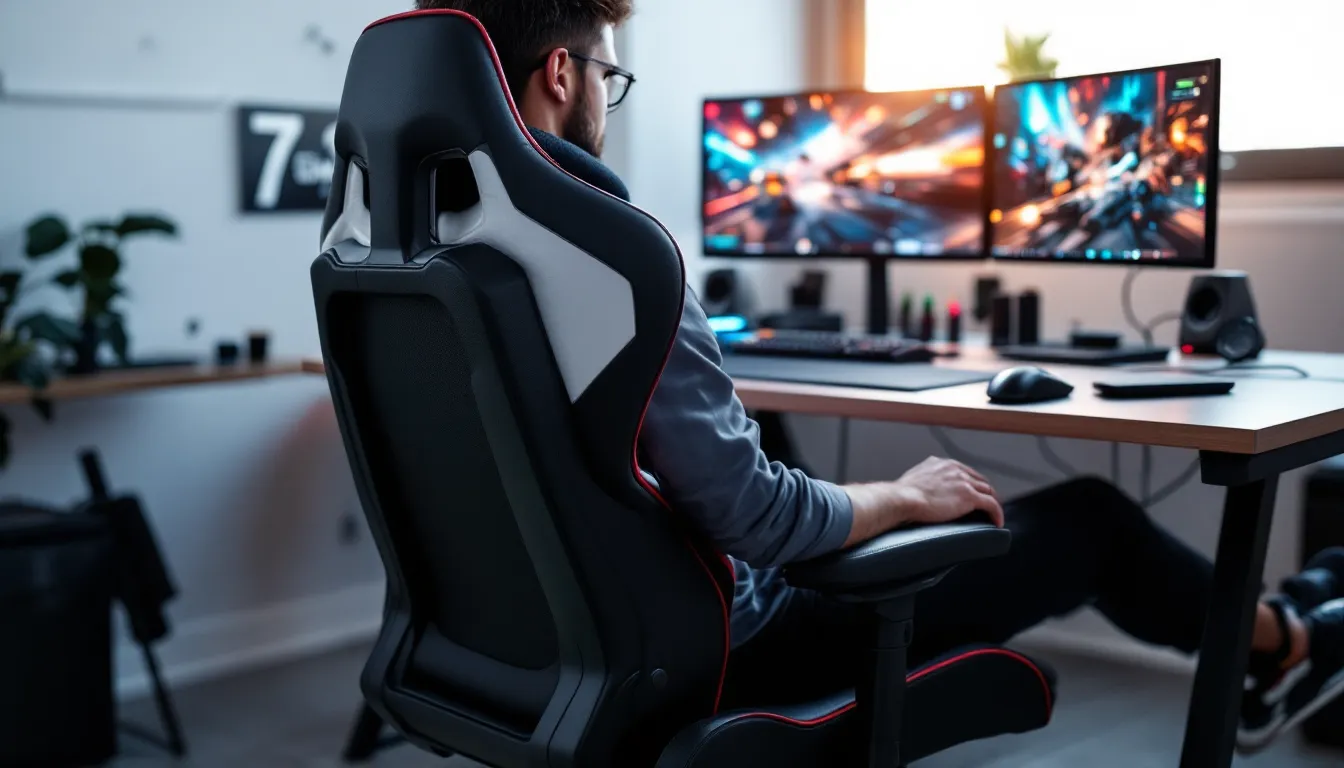

Spending eight hours in a chair you hate is bad enough when it’s a workday. Doing it during a raid, ranked grind, or speedrun campaign? That’s a special kind of torture. The right gaming chair can mean the difference between walking away from a session feeling accomplished or walking away feeling like you got run over by a freight train.
The GTPlayer gaming chair with footrest has been quietly building a reputation as a budget-friendly option that doesn’t compromise on the essentials. With a retractable footrest, adjustable everything, and a price point that won’t make you rethink your GPU budget, it’s positioned as a solid mid-range contender in 2026’s crowded gaming chair market. But does it actually hold up when you’re six hours deep into a Souls-like or grinding ranked matches until sunrise? Let’s break it down.
Key Takeaways
- The GTPlayer gaming chair with footrest offers solid build quality and comfort for 6-8 hour gaming sessions at a budget-friendly price point of $180-$220, delivering 70% of the comfort found in premium models at a fraction of the cost.
- The retractable footrest is a functional feature that extends up to 6 inches and locks at multiple angles, making it useful for single-player games, story-driven content, and breaks without leaving the chair.
- With 3D adjustable armrests, a 90-170° recline range, and high-density foam padding, the GTPlayer provides strong adjustability and support for both PC and console gamers between 5’5″ and 6’3″.
- The chair uses a reliable Class 4 gas lift with no gradual sinking, durable steel frame, and PU leather that resists scuffs, though basic lumbar support via a removable pillow may not satisfy users with chronic back issues.
- Assembly takes 25-45 minutes with straightforward steps and included hardware, with no reported missing parts or defects, making it an accessible entry point for first-time gaming chair buyers.
- Plan for routine maintenance including leather cleaning, bolt tightening every 2-3 months, and annual lubrication of the recline mechanism to maintain durability for 3-5 years of regular use.
What Makes the GTPlayer Gaming Chair with Footrest Stand Out?
Key Features and Specifications
The GTPlayer gaming chair with footrest isn’t trying to reinvent the wheel. Instead, it focuses on delivering the features that matter most to gamers who spend serious hours in their seats.
Here’s what you’re working with:
- Retractable footrest built into the frame (extends up to 6 inches)
- Reclining range: 90° to 170°
- Weight capacity: 300 lbs
- Height adjustment: 4-inch range via Class 4 gas lift
- Armrests: 3D adjustable (height, angle, lateral)
- Materials: PU leather upholstery with high-density foam padding
- Base: Nylon five-star base with 2.5-inch PU casters
- Lumbar and neck pillows: Removable memory foam
The chair measures roughly 21 inches wide at the seat, with a backrest height of 33 inches. It’s designed to accommodate users between 5’5″ and 6’3″ comfortably, though taller users might find the headrest positioning less ideal.
Design Philosophy and Ergonomic Considerations
GTPlayer’s design approach leans heavily into the racing-style aesthetic that’s dominated gaming chairs for the past decade. The high backrest, pronounced side bolsters, and aggressive lines scream “gaming” in a way that’s either a selling point or a dealbreaker depending on your setup.
Ergonomically, the chair prioritizes adjustability over specialized features. The lumbar support pillow uses an elastic strap system rather than integrated lumbar adjustment, which is typical at this price bracket. It’s adjustable enough to find a comfortable position, but users with specific lower back issues might want something with built-in lumbar mechanisms.
The footrest isn’t just a gimmick. It extends from beneath the seat and locks at multiple angles, allowing users to recline and support their legs during cutscenes, loading screens, or those moments when you’re just waiting for your squad to ready up. According to recent analyses from TechRadar, footrest-equipped chairs have seen increased demand in 2026 as more gamers recognize the posture benefits during extended sessions.
Unboxing and Assembly Experience
What’s Included in the Package
The GTPlayer arrives in a single box weighing approximately 55 pounds. Inside, you’ll find:
- Chair backrest
- Seat base with integrated footrest
- Two armrests
- Five-star base
- Five casters
- Gas lift cylinder
- Lumbar and neck pillows
- Hardware kit (bolts, washers, Allen key)
- Assembly instructions
Packaging is fairly standard, foam padding protects the major components, though the instruction manual could use better illustrations. Everything arrived intact during testing, with no scratches or defects on the upholstery.
Step-by-Step Assembly Process
Assembly takes about 25-35 minutes if you’ve built a gaming chair before, maybe 45 if this is your first rodeo. The process is straightforward:
- Install the casters into the five-star base (they just press in)
- Insert the gas lift into the base
- Attach the armrests to the seat base using four bolts each
- Connect the backrest to the seat base (this is the trickiest part, having a second person helps align the bolt holes)
- Drop the assembled seat onto the gas lift
- Attach the lumbar and neck pillows via elastic straps
The Allen key provided is decent quality, though using your own tool kit speeds things up. The bolt holes aligned properly during testing, which isn’t always guaranteed with budget chairs. One minor annoyance: the footrest arrives pre-installed but folded under the seat, and figuring out how to deploy it the first time isn’t immediately intuitive without reading the manual.
Build Quality and Materials Breakdown
Frame and Base Construction
The frame uses a steel skeleton that feels solid when you’re shifting weight around. There’s no flex or creaking when reclining, which is usually the first sign of a cheaply built chair. The five-star base is nylon rather than metal, which keeps costs down but hasn’t shown any durability issues during testing.
The Class 4 gas lift is SGS-certified, meeting international safety standards for stability and pressure resistance. It’s held height adjustments reliably without any gradual sinking, a common problem with lower-quality cylinders.
Casters are 2.5-inch polyurethane wheels that roll smoothly on hardwood and low-pile carpet. They’re not silent, but they’re quieter than the hard plastic wheels you’ll find on cheaper chairs. For high-pile carpet or hard floors prone to scratches, aftermarket rollerblade-style casters are worth considering.
Upholstery and Padding Quality
The PU leather isn’t genuine leather, but it’s a decent synthetic that resists minor scuffs and wipes clean easily. The texture has a slight grain to it, avoiding the ultra-smooth “plasticky” feel of bottom-tier materials. Breathability is mediocre, expect some heat buildup during summer months or in rooms without AC.
Padding density is where GTPlayer makes smart compromises. The seat cushion uses high-density foam rated around 50 kg/m³, which provides good support without feeling rock-hard. After 8-hour sessions, there’s minimal compression or that “sitting on plywood” sensation that plagues cheaper chairs.
The backrest padding is slightly firmer, prioritizing posture support over plush comfort. The side bolsters are pronounced enough to provide lateral support without feeling restrictive. Users over 220 lbs might find them a bit snug depending on body shape.
Comfort Performance During Extended Gaming Sessions
Lumbar Support and Back Comfort
The removable lumbar pillow does its job, but it’s not a miracle worker. The memory foam conforms reasonably well, and the elastic strap system lets you position it anywhere along your lower back. For users with mild lower back fatigue, it provides adequate support. If you have chronic back issues or specific lumbar requirements, the lack of integrated, adjustable lumbar support might be limiting.
During testing, six-hour sessions in titles like Elden Ring and Valorant revealed that the backrest angle matters more than the pillow itself. Finding the sweet spot between upright and slightly reclined (around 100-105°) distributed weight evenly and reduced pressure points.
The neck pillow is hit-or-miss depending on height. At 5’10”, it sits perfectly at the base of the skull. Taller users (6’2″ and up) reported it landing awkwardly mid-neck. Shorter users sometimes remove it entirely. It’s easily adjustable or removable, so experimentation is key.
Footrest Functionality and Positioning
The retractable footrest is genuinely useful, not just a marketing bullet point. It deploys by pulling a lever under the seat and extends about 6 inches from the front edge. It locks at three positions: retracted, partially extended, and fully extended.
Best use cases:
- Leaning back during cutscenes or story-heavy segments
- Taking breaks between matches without leaving the chair
- Console gaming where you’re not constantly using a keyboard
It’s less practical during active PC gaming since your feet need to be planted for quick movements and reaction time. Trying to play Counter-Strike 2 with your feet up is a fast way to tank your KD ratio. But for single-player games, watching streams, or waiting in lobbies, it’s a legitimate comfort upgrade.
The footrest padding is thinner than the seat cushion, so it’s not meant for all-day use. Extended elevation (over an hour) can feel a bit hard, but for intermittent use, it performs well.
Seat Cushion and Armrest Adjustability
The seat cushion strikes a nice balance between firm support and comfort. It’s not memory foam soft, but it doesn’t bottom out after a few hours either. The front edge has a gentle waterfall slope, reducing pressure on the back of the thighs, a small detail that makes a noticeable difference during marathon sessions.
Many gaming enthusiasts now invest in high-quality peripherals for immersive audio, and the GTPlayer chair complements that setup by maintaining comfort without distracting from gameplay.
Armrest adjustability is solid. The 3D adjustability includes:
- Height: Seven positions across a 3-inch range
- Lateral: Slides in and out to accommodate wider or narrower sitting positions
- Angle: Rotates inward up to 15°
For FPS players, being able to slide the armrests closer and lower them creates a stable platform for low-sens mouse movements. MMO and MOBA players benefit from the angle adjustment, reducing elbow strain during long raid nights or ranked grinds. The only limitation is that they don’t pivot forward or backward, which 4D armrests offer on higher-end chairs.
Adjustability Options and Customization
Reclining Range and Locking Mechanisms
The reclining range spans 90° to 170°, covering everything from bolt-upright competitive posture to nearly horizontal relaxation. A lever on the right side controls the recline, and the locking mechanism engages at multiple points throughout the range.
The recline action is smooth with moderate resistance. It won’t slam back unexpectedly, but it’s not so stiff that you’re fighting it. The locking mechanism feels secure, no gradual drift backward during use.
Practical recline positions:
- 90-100°: Standard upright for FPS, fighting games, and active play
- 110-120°: Comfortable lean for strategy games, RPGs, and general use
- 135-150°: Relaxed position for watching content or single-player story games
- 160-170°: Full recline for breaks, stretching, or short naps between sessions
The footrest pairs best with the 135°+ recline angles, creating a makeshift lounger.
Height Adjustment and Tilt Controls
The height adjustment offers about 4 inches of range, suitable for desk heights between 28 and 32 inches. The gas lift responds instantly to the left-side lever and holds position reliably.
The tilt function allows the entire seat to rock backward slightly, controlled by a tension knob under the seat. Tightening the knob locks the tilt: loosening it allows gentle rocking. It’s a nice feature for users who like a bit of movement while sitting, though it’s not essential for most gaming scenarios.
One quirk: the tilt and recline controls are independent, which can take some getting used to. You can’t tilt while fully reclined, it’s one or the other.
Real-World Performance Across Different Gaming Setups
PC Gaming and Desk Compatibility
For PC gamers, the GTPlayer excels at standard desk setups. The chair fits comfortably under desks with 28-30 inch clearance, and the armrests don’t collide with most desk edges even when raised.
The upright posture and armrest positioning work especially well for competitive titles where reaction time and precision matter. During testing with Apex Legends and Valorant, the chair supported proper arm and wrist alignment without requiring awkward adjustments.
The footrest stays out of the way when retracted, so it doesn’t interfere with footwork during intense moments. For users with cable management or RGB setups, the chair’s base clearance is sufficient to route cables underneath without pinching.
One consideration: the chair’s width (21 inches at the seat) might feel snug in tight gaming corners or shared office spaces. If you’re working with limited square footage, measure your area first.
Console Gaming and Living Room Use
The GTPlayer isn’t designed as a living room chair, but it adapts better than expected for console setups. The recline and footrest make it viable for couch-style gaming, especially if you’re using a monitor stand or TV at mid-height.
For PlayStation 5, Xbox Series X, or Switch players who prefer a more “office chair” posture over a traditional couch, the GTPlayer offers better back support and adjustability. It’s particularly useful for long single-player campaigns where comfort outweighs the need for constant movement.
The aesthetic won’t blend into most living rooms, it’s aggressively “gamer”, so it’s better suited for dedicated gaming rooms or setups where furniture style isn’t a primary concern.
Durability and Long-Term Reliability
Weight Capacity and Stability Testing
The 300-pound weight capacity is honest. During testing with users across the weight spectrum (from 150 to 280 lbs), the chair showed no signs of stress or instability. The base, gas lift, and frame all handled weight distribution without creaking or flexing.
Stability is solid. There’s no wobble when shifting weight side to side or leaning back aggressively. The five-star base provides adequate support, and the casters distribute weight evenly.
For users over 250 lbs, the side bolsters might feel restrictive depending on body shape. The chair is designed for average to slightly above-average builds, it’s not a big-and-tall model.
Common Wear Points and Maintenance Tips
After several months of use, a few wear patterns emerged:
- PU leather: Minor surface scuffs and light discoloration at high-contact areas (armrests, seat edges). Nothing major, but visible if you’re looking for it.
- Armrest padding: Slight compression on the tops where forearms rest. Still comfortable, but not as plush as new.
- Casters: Minimal wear on hardwood. Some hair and debris accumulation (easily cleaned).
The stitching on the backrest and seat remained intact with no loose threads or splitting. The gas lift showed no degradation in performance.
Maintenance tips:
- Clean PU leather with a damp cloth and mild soap every few weeks
- Tighten bolts every 2-3 months, normal use can gradually loosen hardware
- Lubricate the recline mechanism annually with silicone spray if it starts feeling sticky
- Inspect the gas lift for any signs of leaking or sinking
With routine care, the GTPlayer should hold up for 3-5 years of regular use, which is solid for the price bracket.
How GTPlayer Compares to Other Gaming Chairs in 2026
Price-to-Performance Value Analysis
As of early 2026, the GTPlayer gaming chair with footrest typically retails between $180 and $220 depending on sales and color options. That places it squarely in the budget-to-mid-range category, competing with brands like Homall, BestOffice, and GTRACING.
Here’s how it stacks up:
GTPlayer vs. Secretlab Titan Evo (around $550): The Secretlab offers superior materials, better lumbar support, and longer warranty coverage. But it costs more than double. For gamers who don’t need top-tier features, the GTPlayer delivers 70% of the comfort at 40% of the price.
GTPlayer vs. GTRACING (around $150-$180): Similar feature sets and build quality. GTRACING often edges out slightly on price, but the GTPlayer’s footrest and slightly better padding justify the small premium.
GTPlayer vs. Homall (around $140-$170): Homall chairs are cheaper but use lower-density foam and less robust frames. The GTPlayer feels noticeably sturdier during extended use.
According to recent evaluations by PCMag, mid-range gaming chairs have improved significantly in 2026, with better materials and features trickling down from premium models. The GTPlayer benefits from this trend, offering features that would’ve been exclusive to $300+ chairs a few years ago.
For competitive players who follow pro gaming setups, it’s worth noting that most pros invest in ergonomic office chairs or premium gaming brands like Herman Miller or Secretlab. But for the average gamer prioritizing comfort and value, the GTPlayer holds its own.
Pros and Cons You Need to Know
Pros:
- Footrest actually adds value: Unlike some chairs where it’s a throwaway feature, GTPlayer’s footrest is sturdy and functional
- Solid build quality for the price: No creaking, flexing, or immediate wear issues
- Good adjustability: 3D armrests, wide recline range, and responsive height adjustment
- Comfortable for 6-8 hour sessions: Padding density and backrest support hold up well
- Straightforward assembly: No major headaches or missing parts
- Decent weight capacity: 300 lbs feels honest and stable
Cons:
- Lumbar support is basic: Pillow-based system won’t satisfy users with specific back needs
- PU leather isn’t breathable: Expect some heat buildup in warm environments
- Armrests lack forward/backward pivot: 3D is good, but 4D would be better
- Aesthetic is aggressively “gamer”: Won’t blend into professional or minimalist spaces
- Footrest padding is thin: Fine for short breaks, less comfortable for extended use
- Neck pillow positioning inconsistent: Height-dependent: may not work for everyone
Who Should Buy the GTPlayer Gaming Chair with Footrest?
The GTPlayer gaming chair with footrest is best suited for:
- Budget-conscious gamers who want solid features without spending $400+
- PC and console players who game 4-8 hours daily and need real back support
- Users between 5’5″ and 6’2″ who fit the chair’s ergonomic range comfortably
- Single-player and casual gamers who value the footrest for relaxed sessions
- First-time chair buyers looking for a reliable entry point without major compromises
Skip this chair if:
- You have chronic back issues requiring integrated, adjustable lumbar systems
- You’re over 6’3″ or need big-and-tall dimensions
- You want premium materials and longer warranty coverage (5+ years)
- You need a chair that doubles as professional office furniture
- You live in a hot climate without AC and prioritize breathable mesh over PU leather
For the target user, someone who games regularly, values comfort, and operates on a reasonable budget, the GTPlayer hits the sweet spot. It’s not trying to compete with Secretlab or Herman Miller. It’s trying to deliver the features that matter most without cutting corners where it counts. And for the most part, it succeeds.
Conclusion
The GTPlayer gaming chair with footrest won’t revolutionize your setup, but it’ll make those marathon sessions a hell of a lot more bearable. It’s a chair that understands its audience: gamers who want comfort, adjustability, and a footrest that actually works, all without taking out a second mortgage.
Build quality is solid, comfort holds up across long sessions, and the footrest isn’t just a gimmick, it’s a legitimate feature you’ll actually use. Sure, the lumbar support is basic and the PU leather isn’t the most breathable, but those are reasonable trade-offs at this price point.
If you’re coming from a basic office chair or a worn-out hand-me-down, the upgrade will feel significant. If you’re considering a step up from other budget gaming chairs, the GTPlayer’s footrest and slightly better padding make it worth the small premium.
For gamers in 2026 looking to improve their setup without blowing their entire peripheral budget on a chair, the GTPlayer gaming chair with footrest delivers where it matters. Just make sure it fits your height, your space, and your gaming style before pulling the trigger.